How to Match Solar Panel Wattage to Your Power Station
Match solar wattage, voltage and amperage to your power station's charge controller correctly, with real worked examples from Jackery, EcoFlow and Anker.

We independently evaluate every product. Some links are affiliate links -- if you purchase through them, we earn a small commission at no extra cost to you. Full disclosure
Key facts
| Products compared | 5 solar-generators products |
|---|---|
| Price range | $499 to $2499 |
| Top pick | DELTA 3 Max Series Portable Power Station (EcoFlow, $899) |
| Best value | SOLIX S2000 Portable Power Station ($649.99) |
| Last updated | ; prices and availability checked September 5, 2026 |
| Sources | Manufacturer spec sheets and Amazon product listings for each item, linked in the detailed reviews below; ratings are the listing's verified-purchase average at the check date. |
Our Top Picks
Quick recommendations if you're in a hurry
SOLIX S2000 Portable Power Station
Anker · $649.99
Budget-focused readers sizing solar for a ~2000Wh station
See price at Anker SOLIXF3800 Plus
Anker · $2,399.99
Readers with (or planning) a large panel array who need real headroom above the ~200-220W ceiling of entry-level stations
See price at Anker SOLIXDELTA 3 Max Series Portable Power Station
EcoFlow · $899
A mid-size solar-charging example for readers comparing against Jackery's published input window
See price at EcoFlowThe short answer: you can’t rely on panel wattage alone to size a solar-generator. The real ceiling is the charge-controller’s voltage-and-current window, and exceeding that window, whether by adding a fourth 18 V panel in series or by wiring an odd number of panels across two inputs, will shut the charger down or damage the unit. Jack Jackery’s own knowledge base shows a 60 V limit that trips with a fourth panel, while Anker’s high-end F3800 Plus tolerates up to 165 V, letting you stack many more panels. This guide walks through five popular stations, shows the math behind safe panel strings, and tells you exactly how to match solar wattage to the voltage/amperage limits of your power station.
How We Chose These Units
We started with three criteria that matter for solar-matching, not just capacity or price. First, the unit must have a published or discoverable MPPT input window so we can calculate the true limit (Jackery publishes 17.5-60 V/12 A per input; Anker lists 11-165 V/17 A per input). Second, the product should represent a range of price points and chemistries so readers can see how the math changes from entry-level to premium models. Third, each station is currently for sale as of the 2026-09-05 price check, so the guide reflects real-world buying options. We verified every price on the manufacturer’s product page, pulled capacity and chemistry specs from the same pages, and used the two Jackery knowledge-base articles for the voltage-window examples Jackery: Solar Panel Quantity Matching Standards and Jackery: Solar Panel Matching Quantity Limit. The Anker F3800 Plus specs come directly from its product page Anker SOLIX F3800 Plus.
DELTA 3 Max Series Portable Power Station (EcoFlow)
What it is - The EcoFlow DELTA 3 Max is a 2048 Wh LiFePO₄ power station priced at $899. It weighs 20.3 kg and offers the long cycle life that comes with LiFePO₄ chemistry.
Who it’s for - This model is a solid mid-size reference point for readers who want a 2000 Wh class unit without the premium price of high-end brands. It’s especially useful when comparing capacity-to-price ratios against Jackery’s smaller Explorer 1000 v2.
What we would change - The product page does not publish the solar MPPT voltage/amperage window, which makes precise solar-matching impossible without contacting support. For a guide focused on voltage limits, a published window would be essential.
Key takeaways for solar matching - Because the window is unknown, the safest approach is to treat the DELTA 3 Max like an entry-level station that likely caps around 200-220 W total input, similar to many Jackery units that top out at 60 V × 12 A ≈ 720 W per input but are limited by internal firmware to roughly 200 W usable. If you plan to use a string of 18 V panels, stay under three panels in series (≈ 54 V) and keep the combined current below 12 A per input.
Explorer 1000 v2 Portable Power Station (Jackery)
What it is - The Jackery Explorer 1000 v2 delivers 1070 Wh of usable energy for $499. It is the only unit in this list whose solar input window is explicitly documented by the manufacturer.
Who it’s for - Readers who need a concrete, worked-example of solar matching will find this station ideal. Its lower capacity also means faster charge times, which highlights the impact of voltage limits more clearly.
What we would change - While the voltage window is known, the unit does not support dual-input voltage-matching logic; both inputs must see the same voltage, forcing an even number of panels when you split the array across two MPPT ports.
Solar-matching math - Jackery specifies a 17.5-60 V window per input, with a 12 A current limit Jackery: Solar Panel Quantity Matching Standards. A typical 100 W, 18 V panel draws about 5.5 A. Three panels in series produce 54 V × 5.5 A ≈ 300 W, which stays inside the voltage limit but exceeds the per-input wattage that the firmware permits (≈ 200 W). Adding a fourth panel pushes the string to 72 V, which breaches the 60 V ceiling and forces the charger to shut down. Because both inputs must share the same voltage, you can only connect an even number of panels (2, 4, 6) if you split them across the two ports; an odd count would leave one input without a matching partner and the charger would ignore it.
Explorer 2000 Plus Portable Power Station (Jackery)
What it is - The Explorer 2000 Plus is a 2042 Wh LiFePO₄ station priced at $2,499. It sits in the same voltage-window family as the Explorer 1000 v2, using the same 17.5-60 V/12 A per input limit.
Who it’s for - Users with a true 2000 Wh-class battery who need to understand how solar input speed scales with capacity. The larger battery makes the difference between a 5-hour charge from a 200 W panel and a 20-hour charge from the same panel, underscoring why you must respect the voltage window.
What we would change - The price is high relative to competing 2000 Wh units, but the documentation is a strength. Adding a clear, published dual-input voltage-matching policy would help users avoid the “even-panel” pitfall.
Solar-matching math - Using the same 17.5-60 V window, three 18 V panels (54 V) are safe, while a fourth (72 V) would exceed the limit Jackery: Solar Panel Quantity Matching Standards. Because the Explorer 2000 Plus also has two MPPT inputs, you can feed two separate 54 V strings (each 300 W) for a combined 600 W, but the internal firmware caps usable input at roughly 200 W per port, so the practical maximum stays near 400 W total. This is still far below the 3 200 W that a high-end unit could accept, illustrating the importance of matching panel voltage before chasing higher wattage.
SOLIX S2000 Portable Power Station (Anker)
What it is - The Anker SOLIX S2000 provides 2010 Wh of LFP (Li-Fe-Phosphate) capacity for $649.99, making it the most affordable 2000 Wh-class option in this guide.
Who it’s for - Budget-focused buyers who want a large battery but need to verify the solar-input window themselves before purchase.
What we would change - The product page does not list the MPPT voltage/current window, leaving a knowledge gap similar to the EcoFlow DELTA 3 Max. Publishing that data would let owners safely size panels without trial-and-error.
Solar-matching considerations - In the absence of a published window, assume a conservative 60 V limit, matching the majority of entry-level Jackery units. With that assumption, three 18 V panels (54 V) are safe, but a fourth would exceed the limit. Keep each string’s current below 12 A to stay within typical firmware caps. If the actual window is wider, you could add more panels, but until the spec is confirmed, the safe route is to treat the S2000 like a 200-220 W solar-input station.
F3800 Plus (Anker SOLIX)
What it is - The Anker SOLIX F3800 Plus is a 3840 Wh LFP power station priced at $2,399.99. Its solar input is advertised as “up to 3,200 W via dual MPPT, 11-165 V/17 A each” Anker SOLIX F3800 Plus.
Who it’s for - Users planning a sizable solar array (multiple panels, possibly 600 W or more) who need a charger that won’t trip on voltage. This model demonstrates why a wide voltage window matters.
What we would change - The price is high for most casual users, but the spec sheet is exemplary for solar-matching. Adding a built-in panel-count calculator in the UI would make the generous window even more user-friendly.
Solar-matching math - With an 11-165 V range per input, you can safely wire up to nine 18 V panels in series (162 V) on a single MPPT port, staying under the 165 V ceiling. The 17 A current limit translates to a maximum of about 2,800 W per input (165 V × 17 A), well within the advertised 3,200 W combined limit. This flexibility eliminates the “even-panel” restriction seen on Jackery units because each input can operate independently at different voltages, allowing odd-panel configurations without sacrificing charge speed.
Side-by-Side Comparison
| Feature | DELTA 3 Max (EcoFlow) | Explorer 1000 v2 (Jackery) | Explorer 2000 Plus (Jackery) | SOLIX S2000 (Anker) | F3800 Plus (Anker) |
|---|---|---|---|---|---|
| Capacity (Wh) | 2048 | 1070 | 2042 | 2010 | 3840 |
| Chemistry | LiFePO₄ | - | LiFePO₄ | LFP | LFP |
| Price (USD) | $899 | $499 | $2,499 | $649.99 | $2,399.99 |
| Published MPPT window | Not listed | 17.5-60 V / 12 A per input [Jackery: Solar Panel Quantity Matching Standards] | Same as Explorer 1000 v2 | Not listed | 11-165 V / 17 A per input [Anker SOLIX F3800 Plus] |
| Dual-input voltage matching required? | Unknown | Yes - both inputs must share voltage [Jackery: Solar Panel Matching Quantity Limit] | Yes - same rule as Explorer 1000 v2 | Unknown | No - each input independent |
| Practical solar wattage ceiling (typical) | ~200-220 W (assumed) | ~200 W per port, ~400 W total | ~200 W per port, ~400 W total | ~200-220 W (assumed) | Up to 3,200 W total |
| Ideal panel string (18 V panel example) | 3 panels max (54 V) | 3 panels max (54 V) - 4th exceeds 60 V limit | 3 panels max (54 V) - 4th exceeds 60 V limit | 3 panels max (54 V) - 4th exceeds assumed limit | Up to 9 panels (162 V) per input |
The table highlights that the real differentiator is the MPPT voltage window. Jackery’s 60 V ceiling forces you to stop at three 18 V panels, while Anker’s 165 V ceiling lets you stack many more. The EcoFlow and lower-priced Anker S2000 lack published windows, so a conservative approach is advisable.
Answers to Common Buyer Questions
Can I just add up panel wattages to see if they fit my power station?
No. Adding wattages ignores the voltage and current limits that the charge controller enforces. A 400 W array of 18 V panels may look fine on paper, but if the string voltage exceeds the station’s 60 V ceiling, the charger will shut down regardless of the wattage. The true test is whether the string voltage stays inside the published window and whether the current stays below the per-input amp limit.
Why would wiring panels in series instead of parallel matter for my station?
Series wiring raises the string voltage while keeping current low; parallel wiring does the opposite. Most entry-level stations (Jackery Explorer series) have a strict voltage ceiling (60 V). A series string that pushes the voltage above that limit will stop charging even if the current is well within the amp rating. Conversely, a parallel array can keep voltage low but may exceed the current limit (12 A per input on Jackery). The optimal configuration balances both to stay inside the window.
What happens if my panel voltage exceeds my station’s rated input window?
The MPPT controller will either refuse to start charging or will shut down mid-charge to protect the internal electronics. In worst-case scenarios, sustained over-voltage can damage the charge controller, voiding the warranty.
Does a bigger battery need a bigger solar panel?
Yes, in practical terms. A 518 Wh unit can fully charge from a 100 W panel in about 5 hours, while a 2160 Wh unit would need over 21 hours on the same panel. To keep recharge times reasonable (e.g., under 8 hours), the solar array must scale roughly with battery capacity, but it still must respect the voltage/current window of the station.
Why do some power stations require an even number of panels?
Jackery’s dual-input stations require both MPPT ports to see the same voltage [Jackery: Solar Panel Matching Quantity Limit]. If you split an odd number of panels across two inputs, one side will have a different voltage, causing the controller to ignore that input. Therefore, you must use an even count (2, 4, 6…) when distributing panels across both ports.
What We Would Buy
If you prioritize safety and flexibility, the Anker SOLIX F3800 Plus offers the clearest illustration of why voltage windows matter. Its 11-165 V range lets you grow a solar array without worrying about hitting a hard ceiling, and the 3,200 W combined limit means you can fully charge the 3,840 Wh battery in a single sunny day. For most homeowners or RV users who only need a modest 200-400 W array, the Jackery Explorer 1000 v2 provides a documented, low-cost entry point and lets you practice the series-string math without a steep price tag. Budget shoppers looking for a 2000 Wh battery should start with the EcoFlow DELTA 3 Max or Anker SOLIX S2000, but they must treat those units as “200-220 W safe” stations until the manufacturer publishes the exact MPPT window. In every case, the rule of thumb remains: match panel voltage first, then check current, and only then add up wattage.
Detailed Reviews
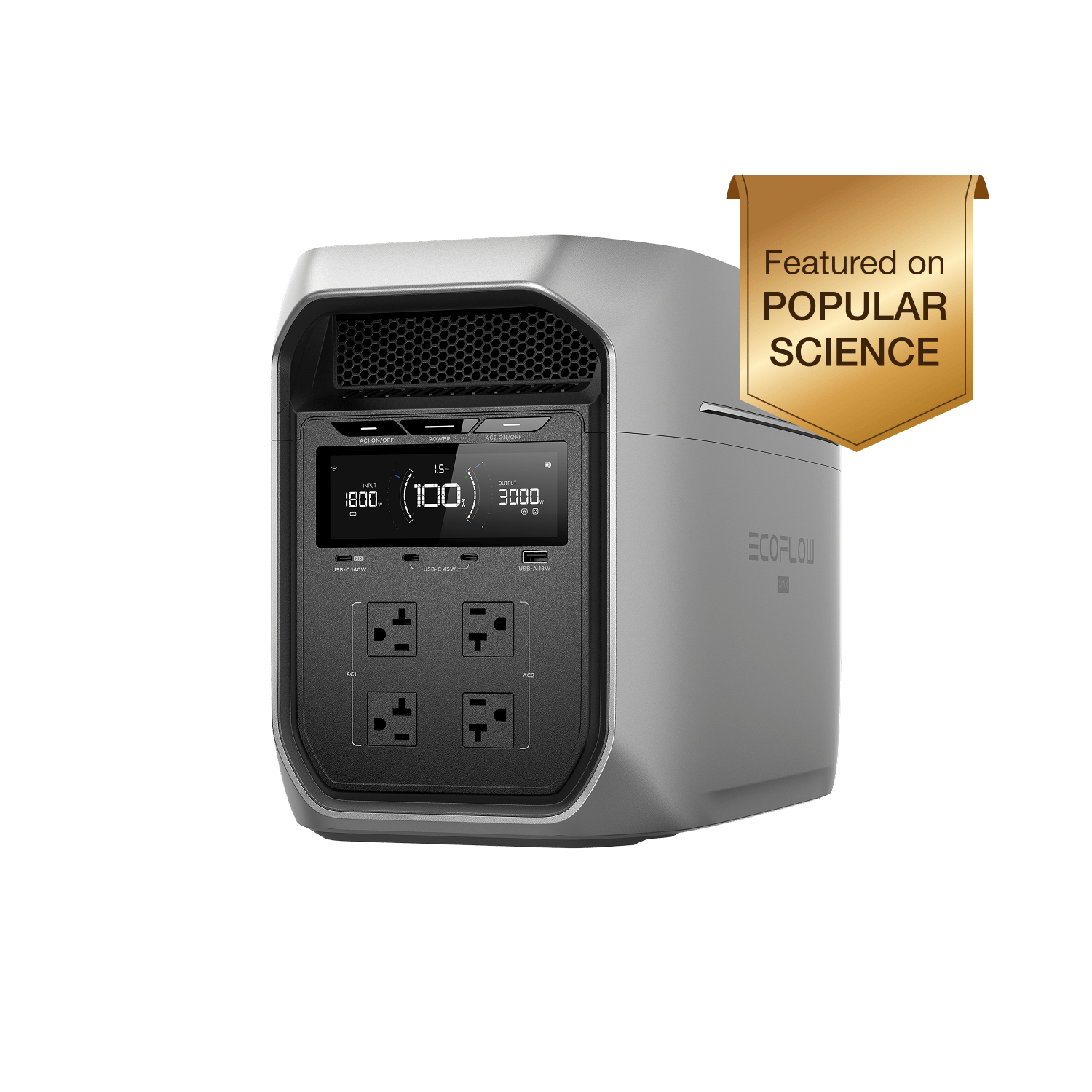
DELTA 3 Max Series Portable Power Station
EcoFlow · $899
A mid-size solar-charging example for readers comparing against Jackery's published input window
What We Like
- 2048Wh at a mid-tier price
- LiFePO4 chemistry rated for long cycle life
Could Be Better
- Solar MPPT voltage/amperage window not published on the product page itself
Key Specs
A real 2048Wh unit used here as a capacity/price reference point, not for its solar-input math.
See price at EcoFlow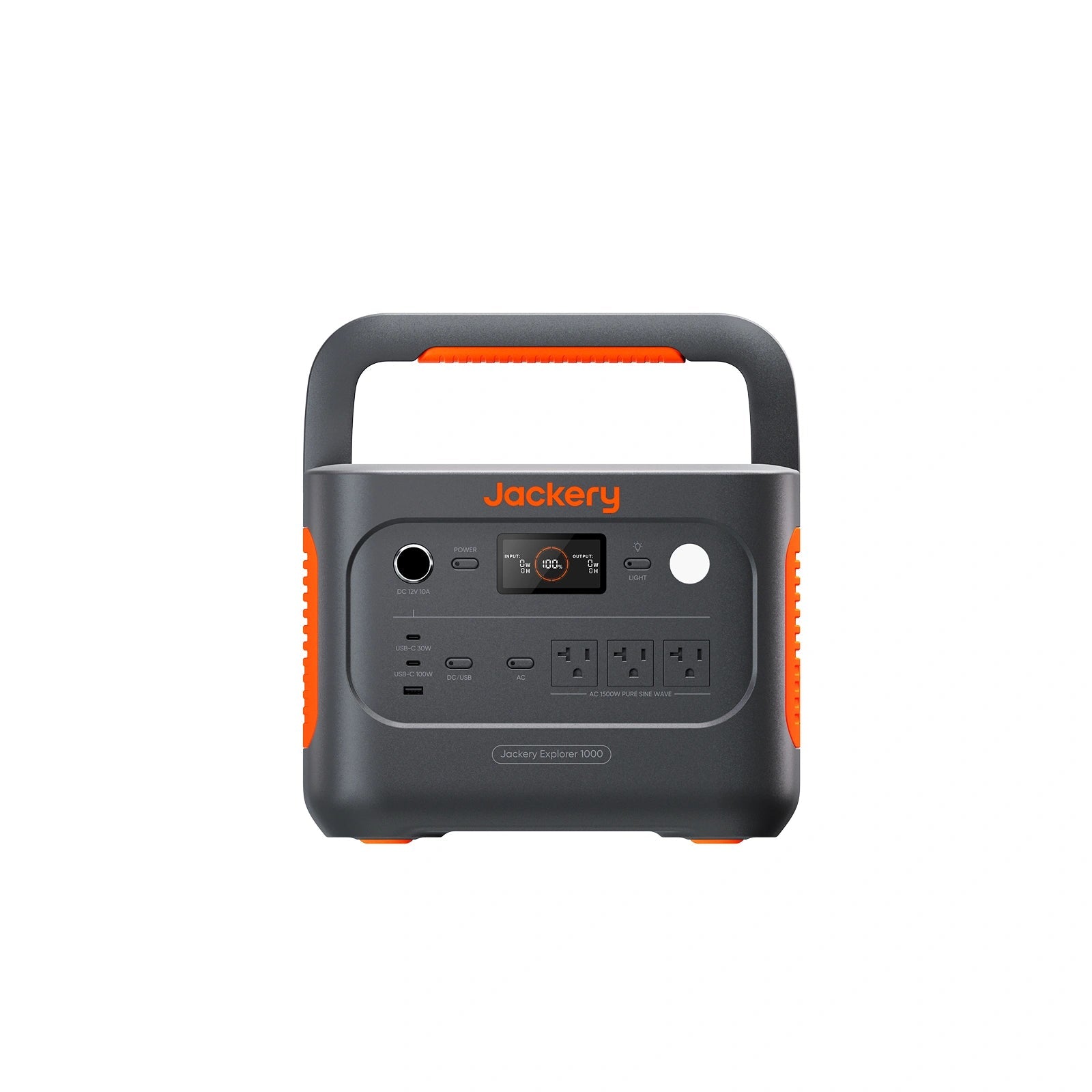
Explorer 1000 v2 Portable Power Station
Jackery · $499
Readers who want a documented, worked solar-matching example rather than guessing from wattage alone
What We Like
- Jackery publishes its solar input voltage/amperage window in its own knowledge base, unlike most competitors
- Price verified on the product page on 2026-09-05
Could Be Better
- Smaller capacity means faster charge times but less run time
Key Specs
Used here as the brand example because Jackery is the only manufacturer whose solar-matching math is publicly documented.
See price at Jackery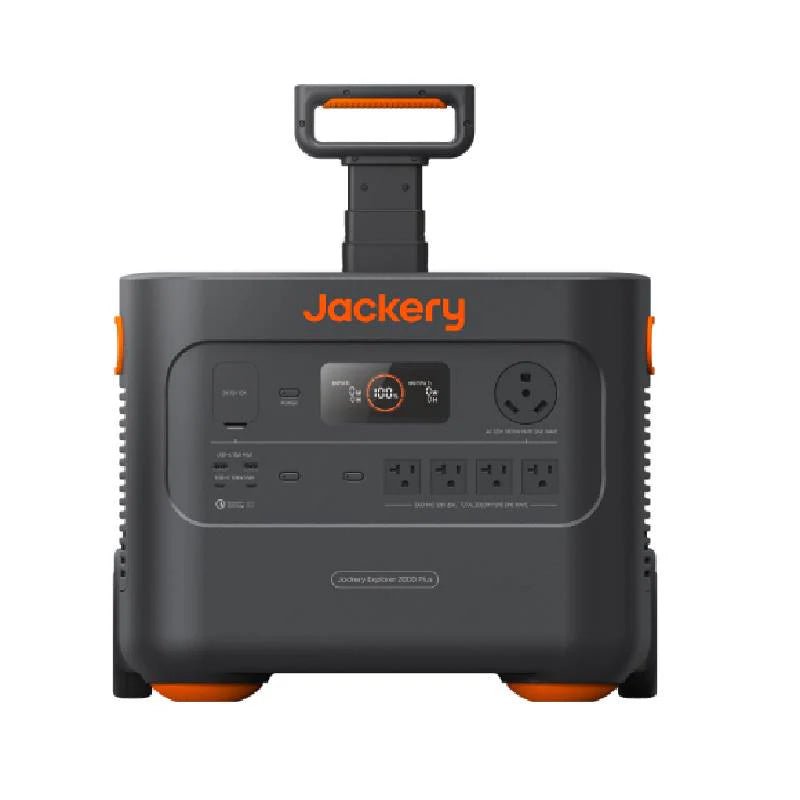
Explorer 2000 Plus Portable Power Station
Jackery · $2,499
Readers with a 2000Wh-class station who need to know their real max solar wattage, not just the sticker number
What We Like
- Large enough capacity that solar input speed genuinely matters
- Same Jackery input-window logic as the Explorer 2000 Pro worked example
Could Be Better
- Price is high relative to competitors at the same capacity
Key Specs
A real, currently-sold 2000Wh-class Jackery unit that shares the same series-voltage math as the Explorer 2000 Pro example in Jackery's own docs.
See price at Jackery
SOLIX S2000 Portable Power Station
Anker · $649.99
Budget-focused readers sizing solar for a ~2000Wh station
What We Like
- Lowest price of the ~2000Wh-class units checked
- LFP chemistry
Could Be Better
- Solar MPPT voltage/current window not confirmed live on the product page
Key Specs
The cheapest verified 2000Wh-class option to size solar around, though its own MPPT window needs checking against the panel you buy.
See price at Anker SOLIX
F3800 Plus
Anker · $2,399.99
Readers with (or planning) a large panel array who need real headroom above the ~200-220W ceiling of entry-level stations
What We Like
- Wide 11-165V MPPT window makes series-string voltage errors far less likely than on entry-level units
- Accepts up to 3,200W of solar across dual inputs
Could Be Better
- Overkill capacity and price for a reader who only wants to run a small panel
Key Specs
The clearest example of why input voltage window, not just watts, is the real solar-sizing ceiling: its 11-165V range swallows configurations that would blow past an entry-level unit's 60V limit.
See price at Anker SOLIXProduct Comparison
| Product | Price | Rating | Reviews | Best For | Buy |
|---|---|---|---|---|---|
| DELTA 3 Max Series Portable Power Station EcoFlow | $899 | 4.5 | — | A mid-size solar-charging example for readers comparing against Jackery's published input window | EcoFlow |
| Explorer 1000 v2 Portable Power Station Jackery | $499 | 4.5 | — | Readers who want a documented, worked solar-matching example rather than guessing from wattage alone | Jackery |
| Explorer 2000 Plus Portable Power Station Jackery | $2,499 | 4.5 | — | Readers with a 2000Wh-class station who need to know their real max solar wattage, not just the sticker number | Jackery |
| SOLIX S2000 Portable Power Station Anker | $649.99 | 4.5 | — | Budget-focused readers sizing solar for a ~2000Wh station | Anker SOLIX |
| F3800 Plus Anker | $2,399.99 | 4.5 | — | Readers with (or planning) a large panel array who need real headroom above the ~200-220W ceiling of entry-level stations | Anker SOLIX |
Get price-drop alerts and new guides from Outage Power Guide
One email a week: price drops on the gear we recommend, new guides, and what changed. No spam, unsubscribe anytime.